
Does exercise improve gaming performance? What actually helps
What exercise really does for gamers: focus, sleep, less stiffness in long sessions, and a simple routine that fits around your game nights.
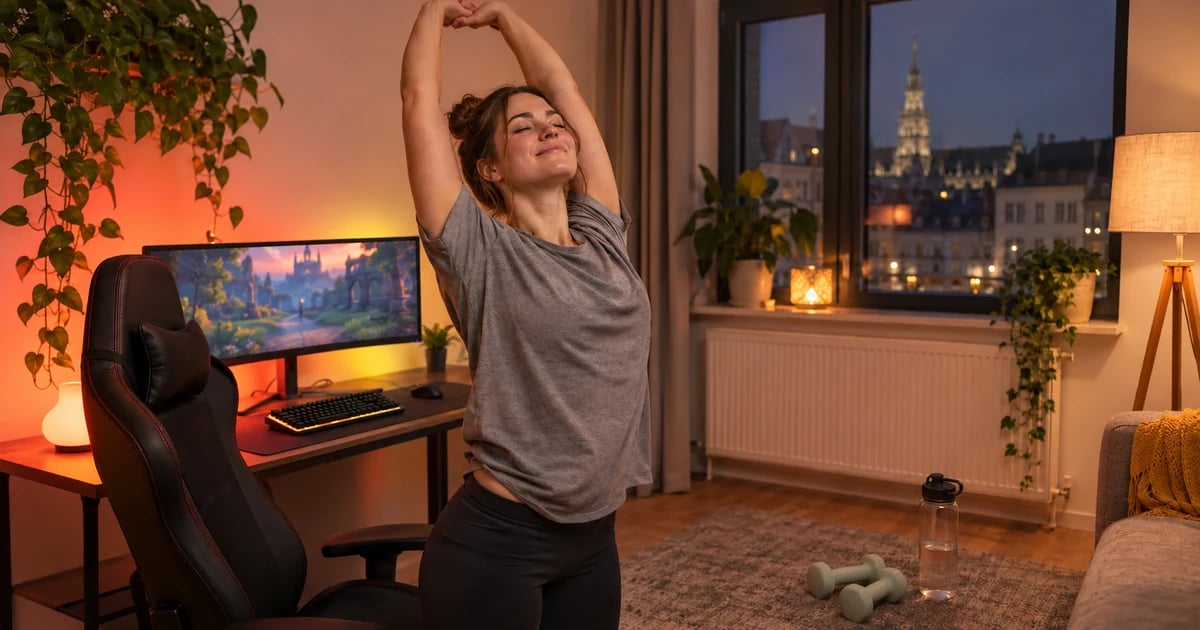
Yes, regular exercise can help your gaming, but not like a cheat code. It supports focus and mood, helps you sleep better, and reduces the stiffness and fatigue that build up in long sessions. A single workout won't turn you into a pro, but two short sessions a week plus regular breaks make long evenings at the desk feel better.
What exercise actually does for your brain
I'm Karlo Lepen, personal trainer in Antwerp and a gamer since the PS1, so this question comes up a lot. The honest answer is that research on exercise and the brain is solid, while research on exercise and gaming specifically is still young. What we know with confidence is that regular aerobic activity and strength training support attention, mood and sleep quality, and that a short bout of moderate exercise can leave you feeling more alert for a while afterwards.
That doesn't mean a set of push-ups will give you faster reactions in your next match. It means that over weeks, a body that moves regularly is better at handling long focus, stress and late nights. That's where the real gains are.
Sleep is the biggest upgrade you're not using
If there's one thing that changes performance in any game, it's sleep. Adults need seven to nine hours, and most gamers I work with are well under that during busy weeks. Regular exercise tends to make it easier to fall asleep and to sleep more deeply. Better sleep means better focus, better decisions and a better mood when you lose three games in a row.
The one thing to watch is timing. A hard workout right before a late session and then bed can keep some people wired. If that's you, train earlier in the evening and keep the last hour before sleep calm.
Long sessions, stiffness and fatigue
After a long session, a stiff neck, tight hips or a sore lower back aren't just annoying. They pull your attention away from the game. Sitting still for hours also makes you feel sluggish. Moving regularly, and building some strength in your back, shoulders and hips, makes long sessions more comfortable. The basic rule is simple: get up and move a little every 45 to 60 minutes, for example between matches or during a queue.
Your desk setup helps too. Screen roughly at eye level, elbows close to your body, feet on the floor or on a footrest. That doesn't replace moving, but it reduces the load that builds up through the evening. Add two workouts a week that strengthen your back and glutes, and sitting gets much less tiring than before.
What helps, and what it does for you
| Habit | What it helps with | When you notice it |
|---|---|---|
| Two short strength workouts a week | Posture, less stiffness, energy, confidence | Usually after a few weeks |
| A 10 to 20 minute walk before gaming | Alertness and mood | Often the same evening |
| Short breaks every 45 to 60 minutes | Neck, back and wrist comfort, focus | Within the same session |
| Seven to nine hours of sleep | Focus, decision making, mood | After a few good nights |
| Water instead of a third energy drink | Steadier energy, better sleep | Within days |
A five-minute warm-up before ranked
Athletes warm up before a match, and there's no good reason a gamer shouldn't do the same before a long ranked session. It takes five minutes and you can do it next to your desk:
- Ten slow shoulder rolls forwards and backwards.
- Gentle neck turns left and right, and chin tucks, five each.
- Open and close your hands ten times, then circle your wrists both ways.
- Ten bodyweight squats to get blood moving through your legs.
- Three slow, deep breaths before you queue up.
None of this is magic. It simply means you sit down warm instead of cold, your hands feel ready, and you start the session with a calmer head. Many of my clients say the breathing part helps most after a frustrating loss, too.
Do esports players actually train?
Many professional esports teams now include physical training, sleep and nutrition in their routines. They don't do it because lifting weights makes your aim better directly. They do it because long practice days are hard on the body and the mind, and players who move, sleep and eat well can practise longer and stay sharper. You don't have to be pro to borrow the same logic. If you spend three or four evenings a week gaming, you're already putting in a lot of desk hours.
A simple routine around your game nights
This is the setup I give most of my gamer clients at the start:
- Two workouts a week of 20 to 30 minutes, on nights without ranked or raids.
- On game nights, a short walk or five minutes of mobility before you log in.
- A break between matches: stand up, roll your shoulders, open your hands, look away from the screen.
- A fixed time to stop, so you still get at least seven hours of sleep.
It sounds almost too simple, and that's the point. A plan you actually follow beats a perfect plan you drop after two weeks. If you want to know whether to do this with me online or in person, read fitness coach for gamers in Antwerp: online or in person.
What exercise won't do
It won't replace practice, game sense or good hardware. It won't fix a bad team. And it isn't medical treatment. If you have ongoing pain in your wrists, neck or back, or numbness and tingling in your hands, see a doctor or physiotherapist before you start. What exercise does is give you a body that can handle the hobby you love for years, not just for the next season.
Start with one free week
If you want a plan that respects your game nights and makes the desk hours feel better, start with my free one-week Training Build. You mark the nights you can't move, I build two short workouts around them, and you get a video for every exercise.
FAQ
- Does working out make you better at video games?
- Not directly like a cheat code, but regular exercise supports focus, mood and sleep and reduces stiffness in long sessions, which helps you play better over time.
- How often should gamers exercise?
- Two short strength workouts of 20 to 30 minutes a week are a good start, plus a short break to move every 45 to 60 minutes while gaming.
- Should I work out before or after gaming?
- A short walk or light mobility before gaming can make you feel more alert. Avoid hard workouts right before bed if they keep you awake.
- Do esports players work out?
- Many professional esports teams include physical training, sleep and nutrition in their routines to help players practise longer and stay sharp.